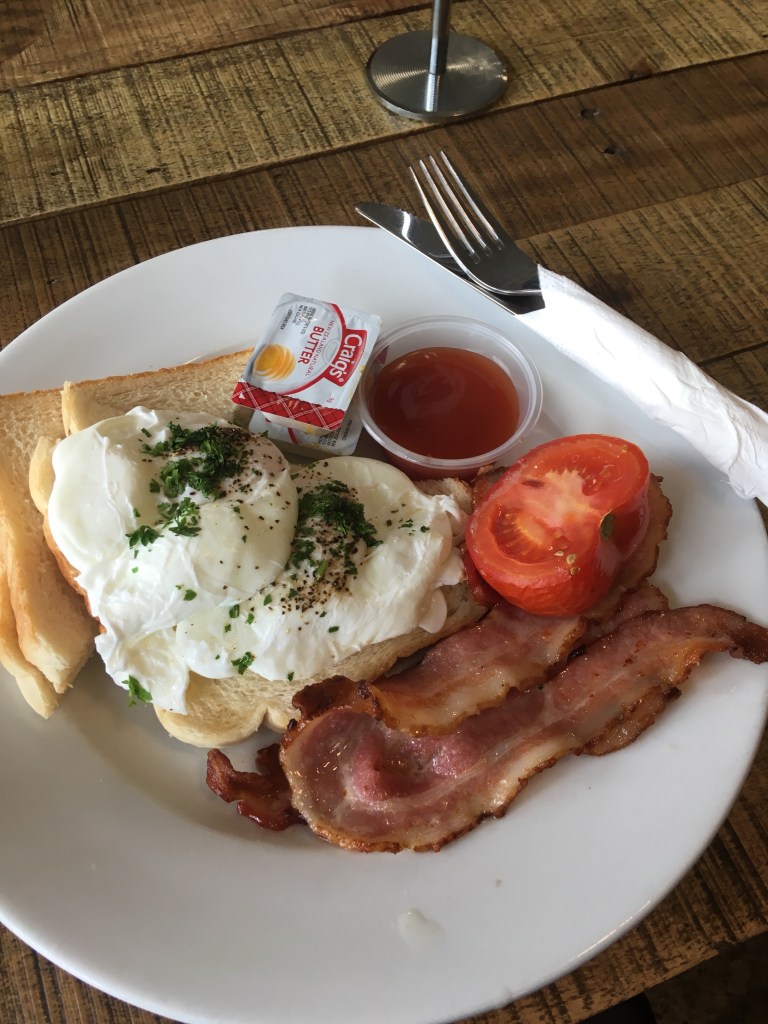
The problem with traveling by bus is that it can be a big waste of time (versus traveling by car on the left side of the road which still seems a bit terrifying). My bus from Waitomo Village wasn’t until 11am so I had a slow morning in a place that didn’t have a whole lot going on unless I decided to go for some long walks with my small luggage and backpack. I had a nice breakfast instead at a cafe and waited. 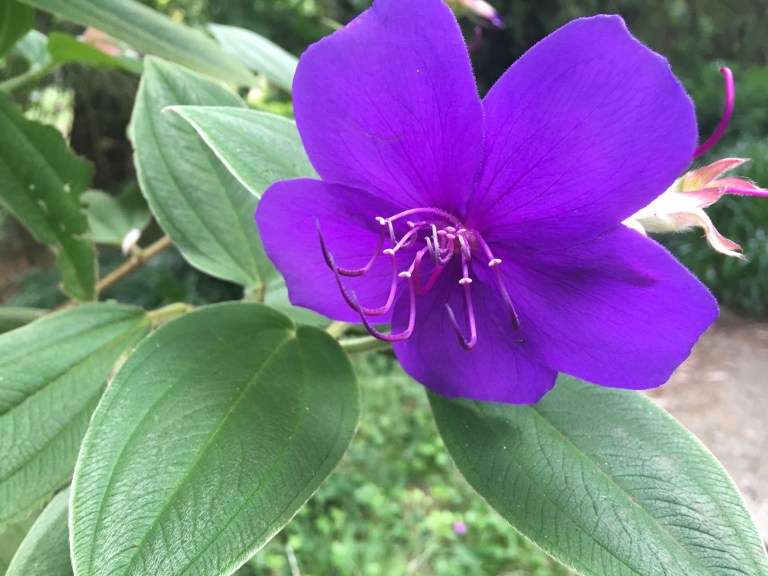
All of the bus stops are iSite transit depots and are information centers and gift shops. They’re very nice, clean and the staff can answer any questions. I waited for my bus outside and waited more. At 11:10 I was afraid I had missed it so went inside to ask if they had information. One of the kind staff called up the bus company with my reservation number and found out I didn’t miss it, it was just late, 37 minutes late by the time it arrived. This bus was a Great Sights coach that was already loaded with a tour group (lots of Americans) and the driver gave commentary almost the entire way to Rotorua, 90 minutes, not just the geology and local information but also stories from his childhood, love of airplanes, terrifying experiences and, later in life, pals that were locally famous. Oh my.
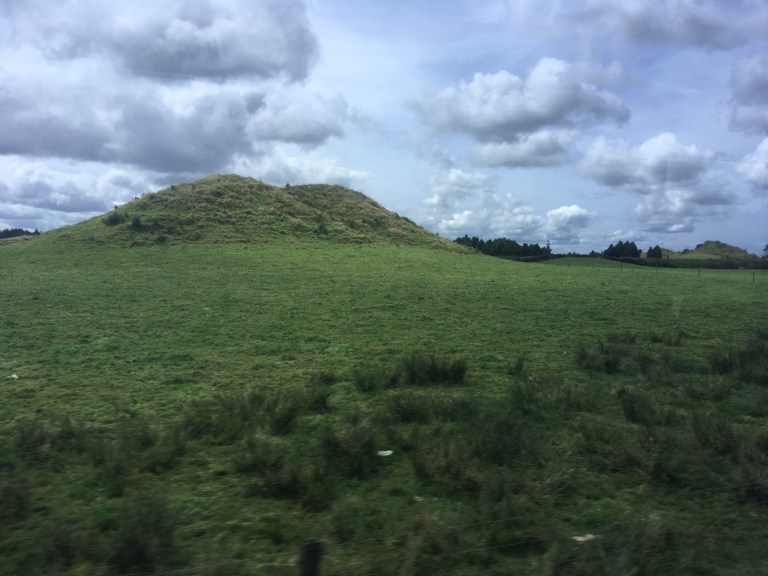

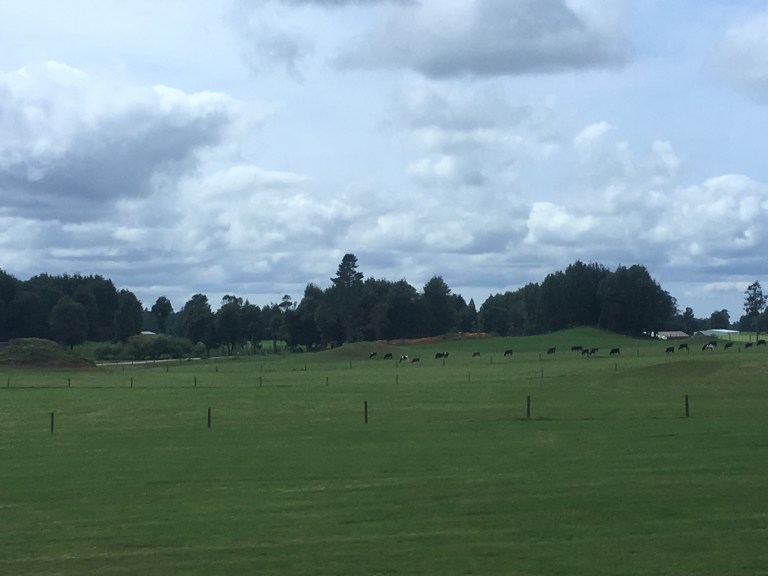
We arrived at a drop off point outside Rotorua where we were divided into groups going our separate ways. This place is called the Agrodome where people tour farm practices (sheep shearing, working sheep dogs, etc.). Across the street is the Zorb park where a person can get in a giant ball and roll down a hill (Kathy and Sally, I thought of you!).

 See big plastic balls at top? And fuzzy plastic ball at bottom (sorry for poor picture quality!)? A Zorb…not my idea of fun but for some….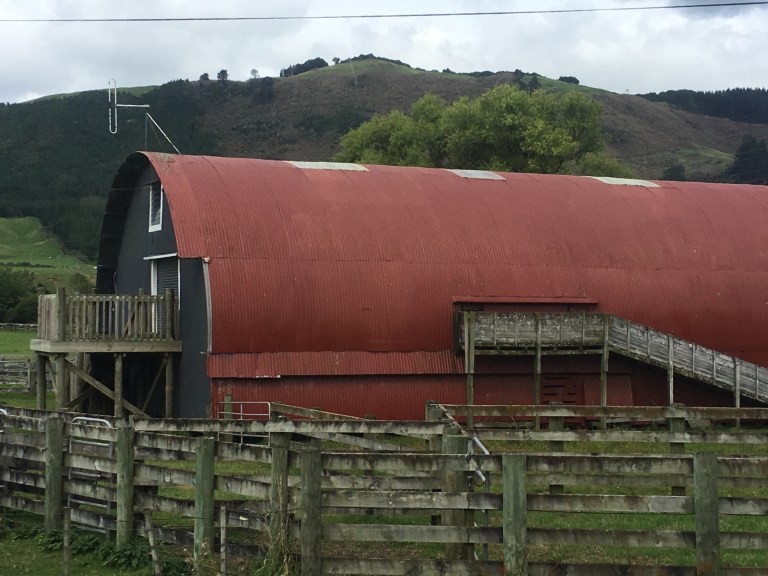
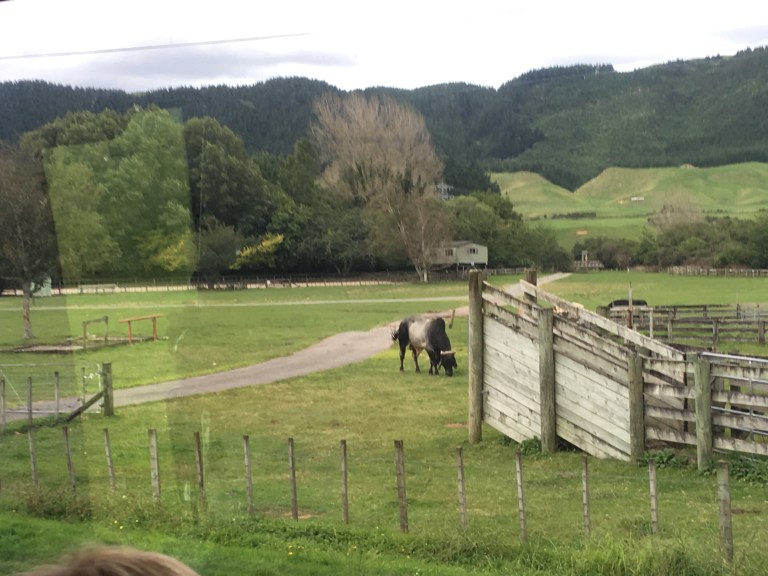

This is the Agrodome entrance. No, not a real Merino sheep, a sculpture. Two types of sheep (probably more): Romney sheep for meat and has poor wool for spinning, Merino sheep for wool.
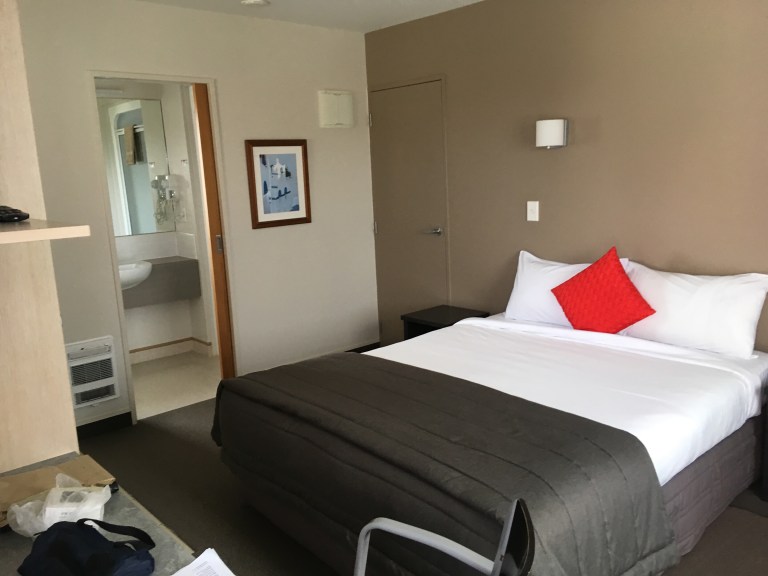
I switched to my next shuttle at the Agrodome and that brought me to my motel for two nights in Rotorua, the Bella Vista Motel (aptly named!). It’s a nice place, clean and comfortable.

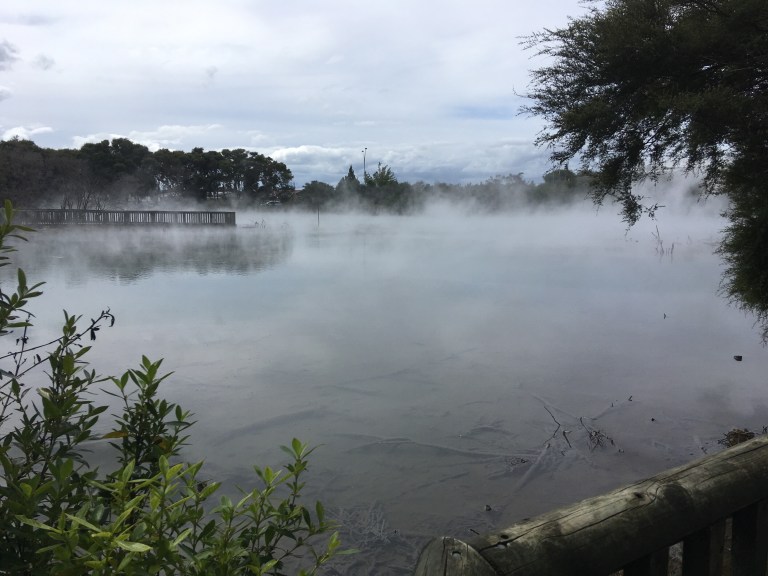
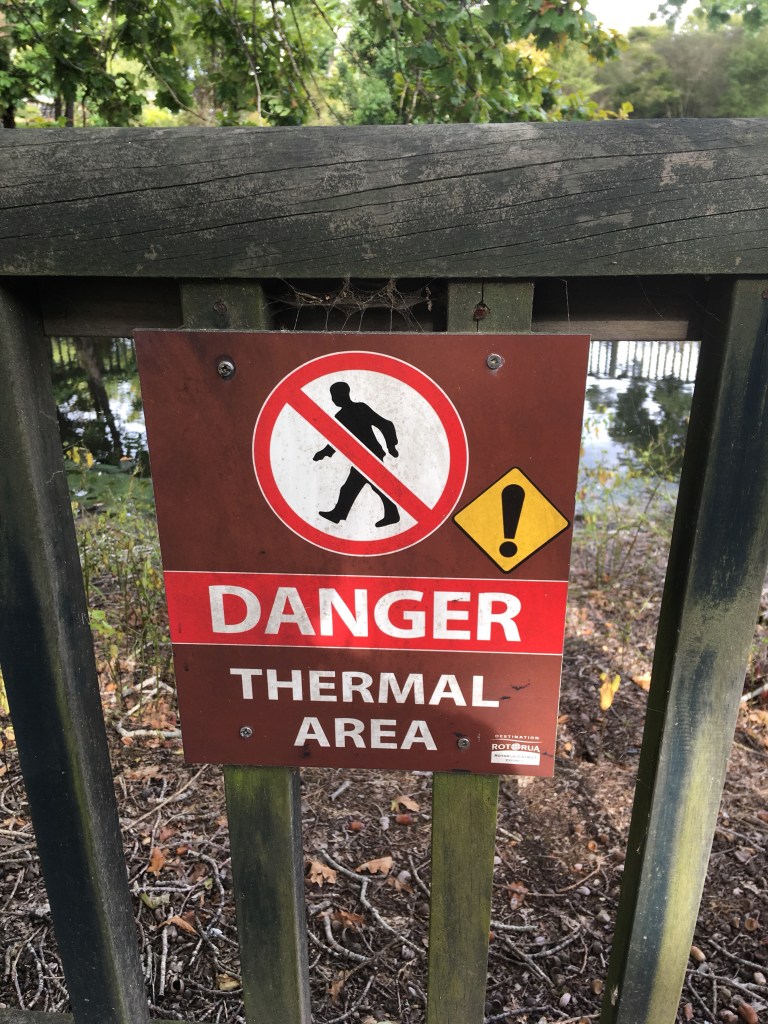
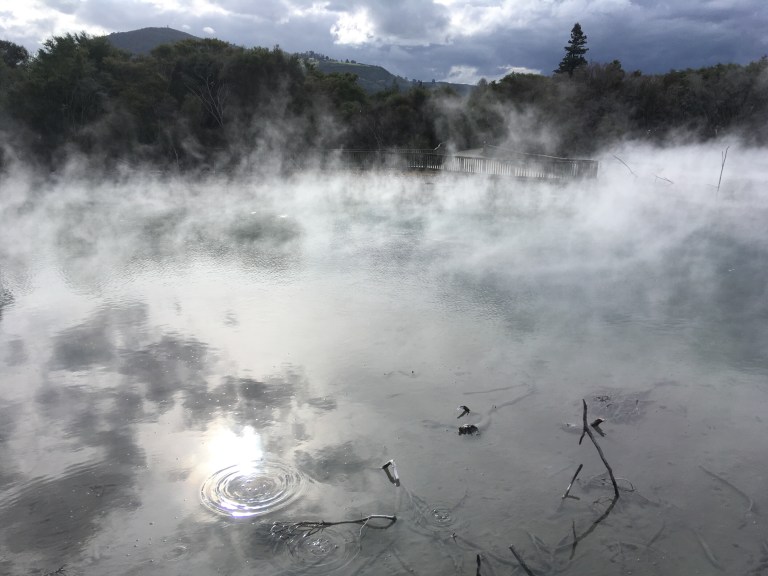
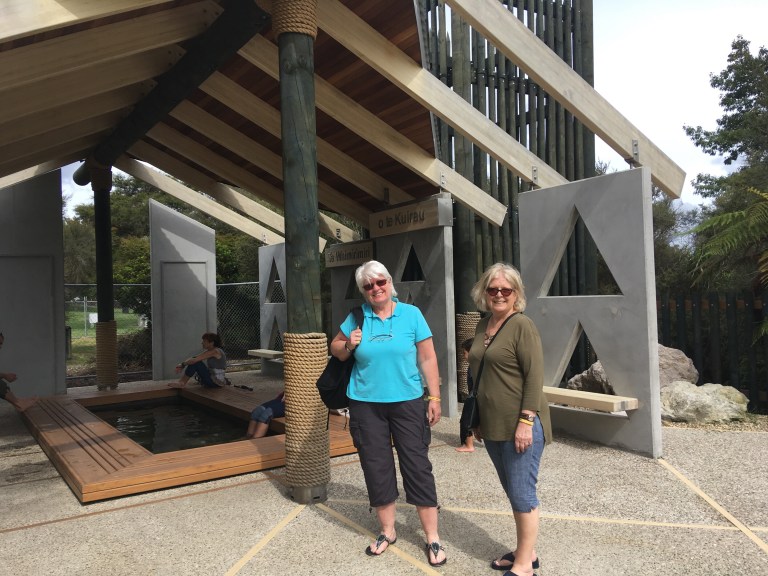
My only activity this day was the evening Mitai Maori haka and hangi dinner so I took the opportunity to walk into Rotorua and explore. The motel manager directed me to downtown through Kuirau Park a block away that is an active geothermal area. There’s a steaming geothermal lake and foot paths through many steaming pools and mud pits to some foot baths (heated geothermal pools cleaned, scrubbed and refilled each day). It’s so crazy that this local city park has all of this boiling and steaming spots in it and even the neighboring homes have fenced off spots in their yard where steam is rising up out of a hole. One of my shuttle drivers said home owners can tap into that heat for heating, cooling, drying clothes, whatever is needed.
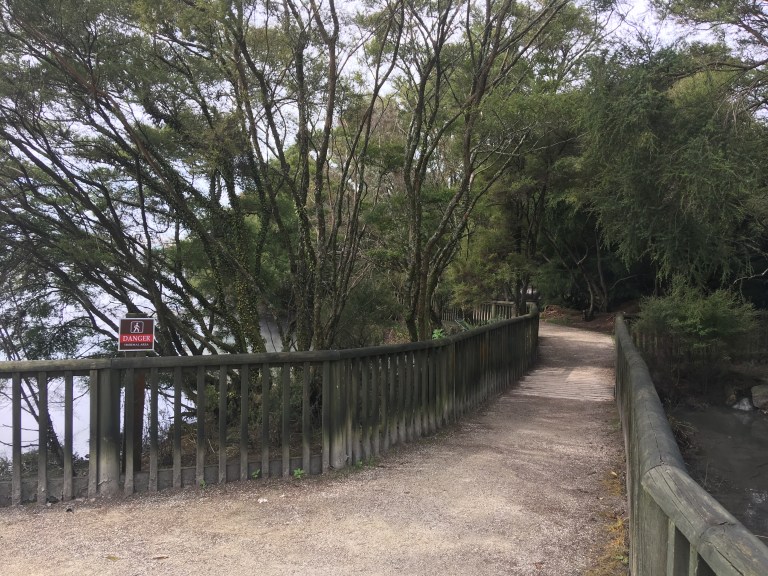
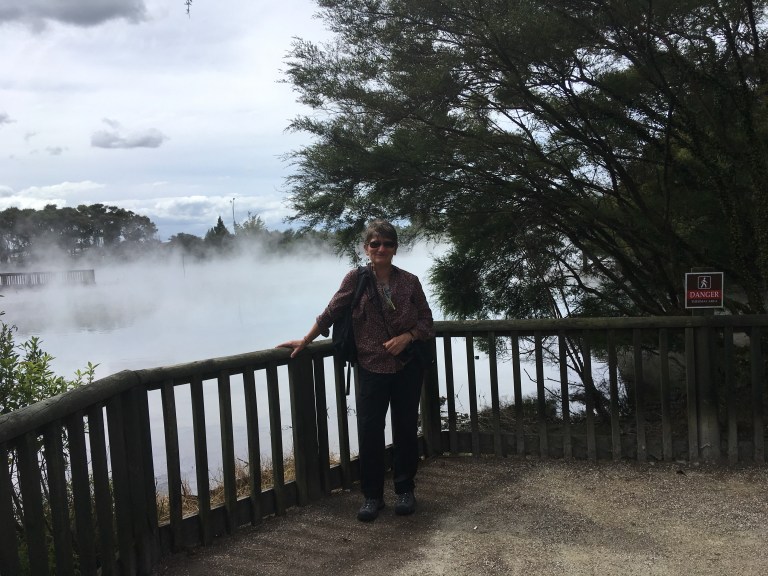

 Two women, Joan and Chris, sisters from Liverpool, UK, were also staying at the motel and we all walked together to the park. They made me laugh the entire time. I felt like I was talking to Shirley Valentine and they kept asking if I could understand them, which I could. Joan especially was going on about how great Americans are, how innovative we are and how proud I must be…which did bring out my patriotic side, along with the angst of what’s happening now AND it being the day of the student walkout which brings me to tears. Anyway, the two of them are political opposites and got into an argument about Brexit which was very entertaining. It’s so great to interact with people from all over the world and get their perspectives.


I left the park and wandered into the downtown area. Rotorua sits on Lake Rotorua (in Maori, Roto= lake, rua= second…Second lake). Here are some facts about the city:
Population: 73,000, 40% Maori; 3 million tourists per year; 25% of population works in tourism industry.
California Monterrey Pine is a plantation crop, 3rd largest export. Harvard University suggested it over 100 yrs ago when New Zealand was close to losing all their native trees due to deforestation. They decided to preserve their own forests and grow the pine as a crop for their timber needs and export.
California Rainbow trout (and a couple of other trout species) was introduced also 100 years ago but it ate many native species and is now a pest. They grow an average size of 25 pounds, no exaggeration…I saw them with my own eyes. Here’s a picture I found of a monster Rainbow caught by a Canadian:

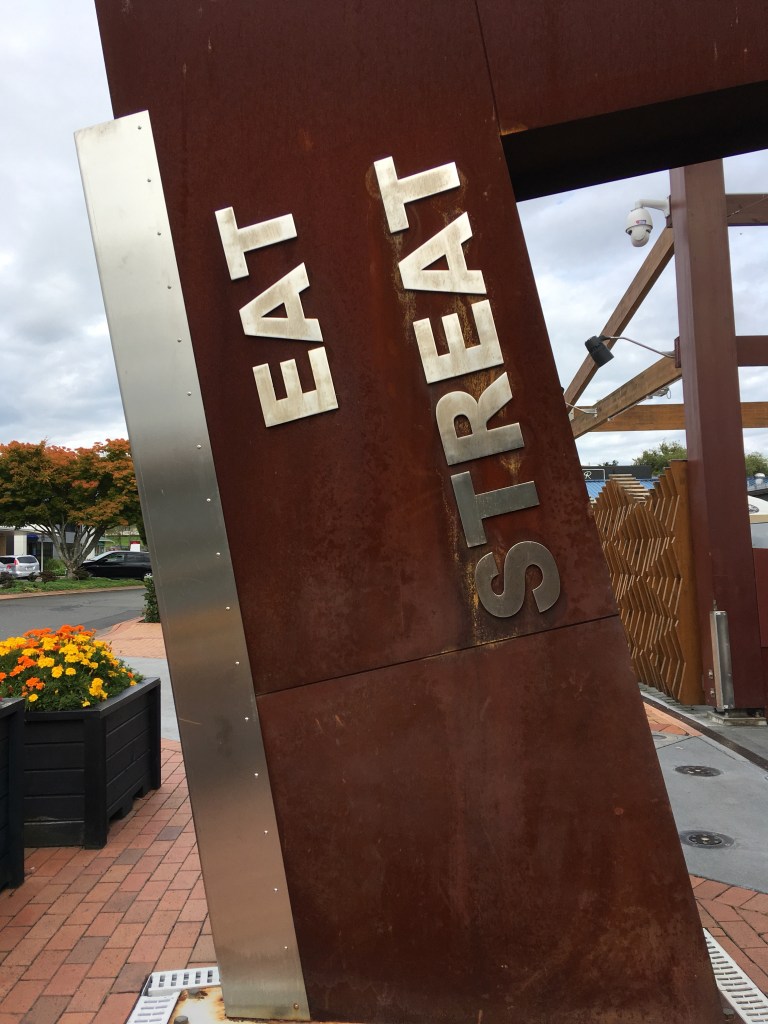
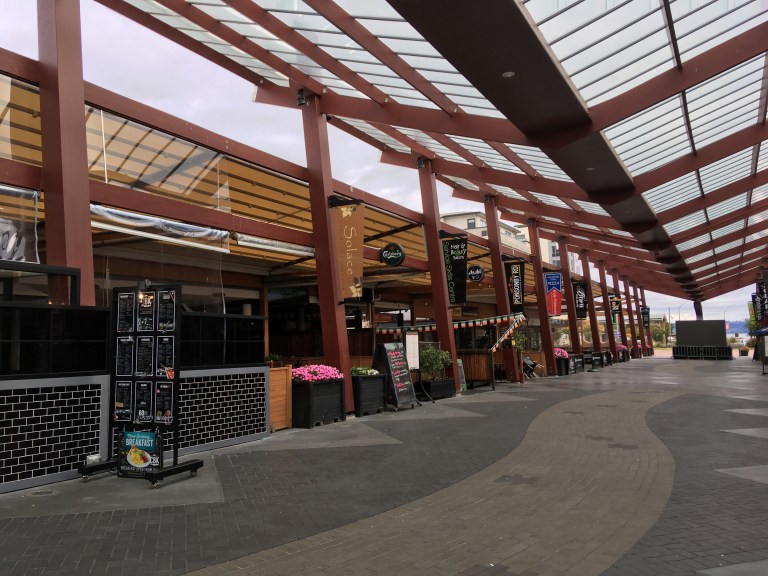
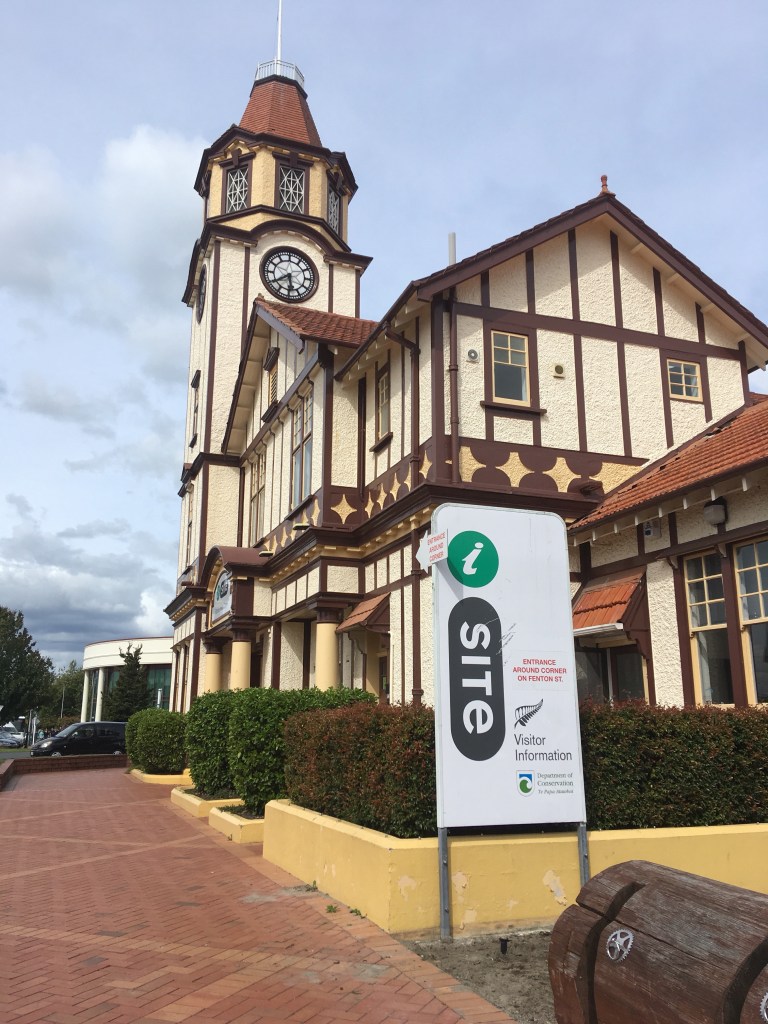
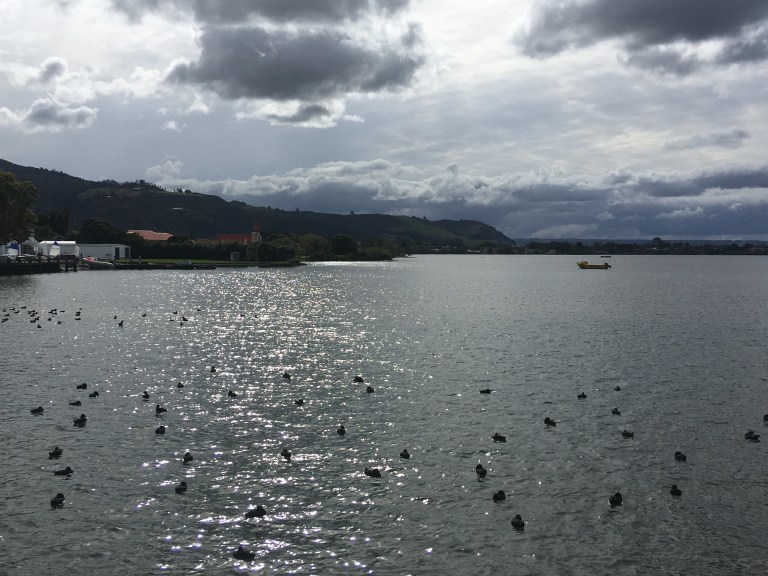
Here are some pictures of downtown Rotorua and Lake Rotorua: 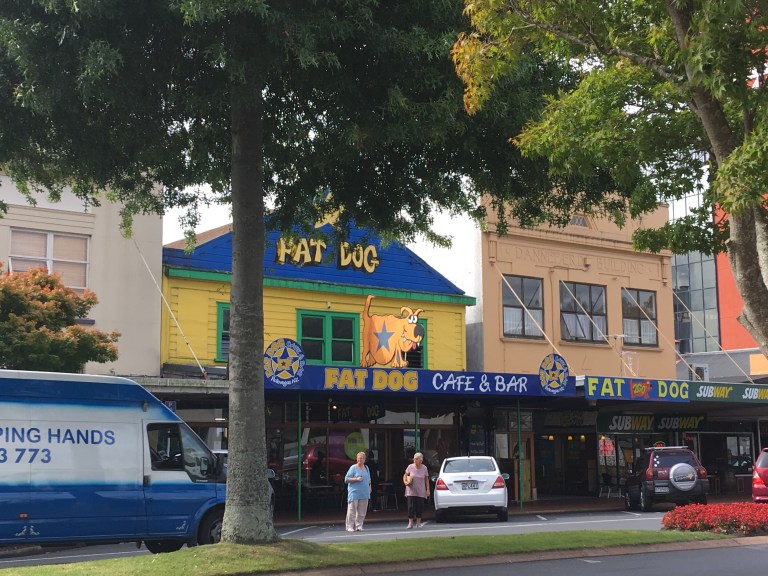


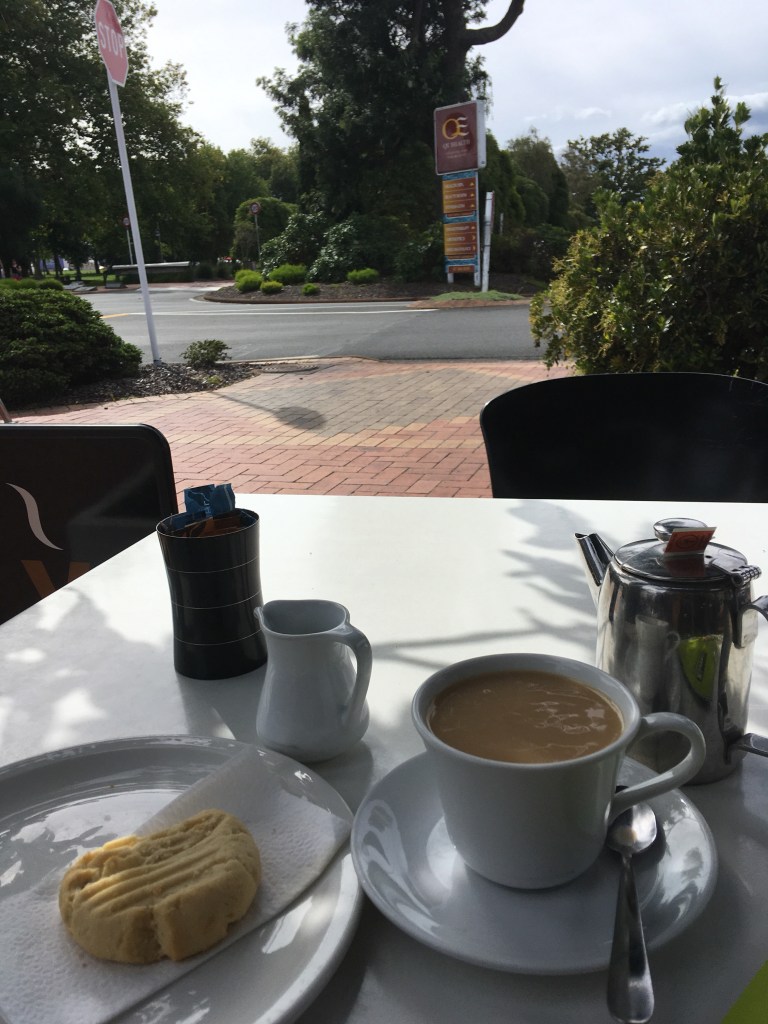
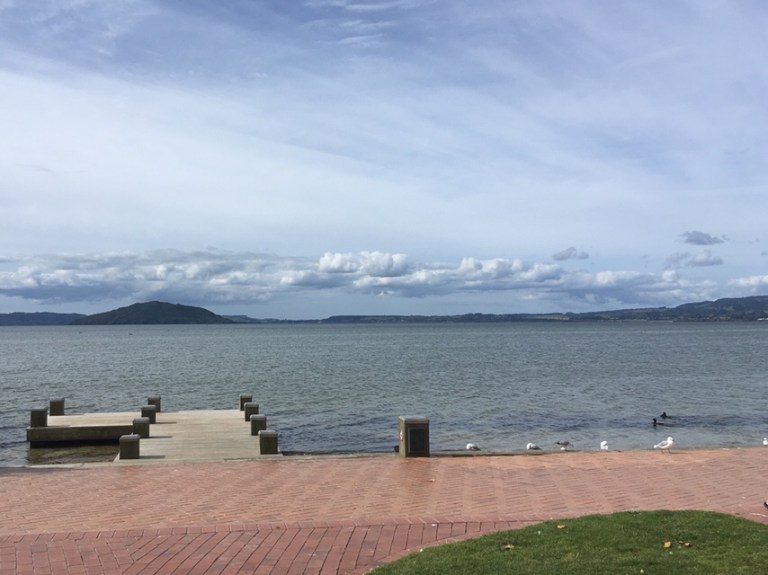
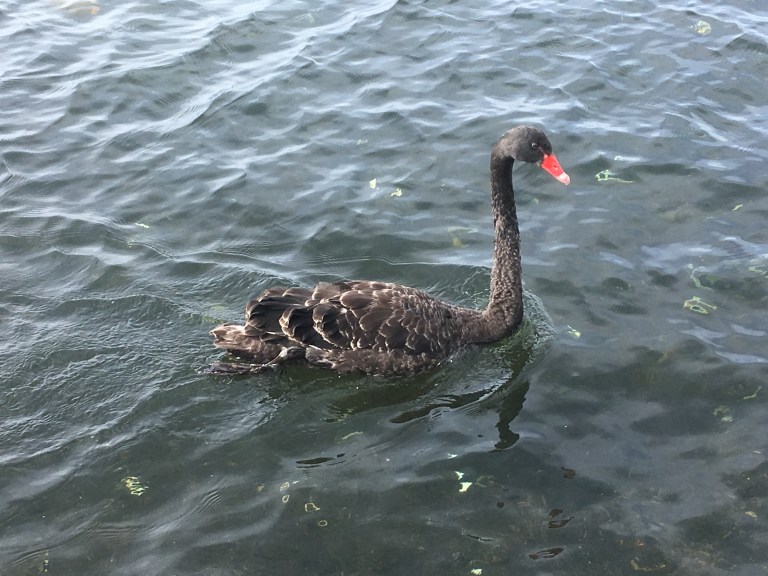


The black spots in the water are black ducks. 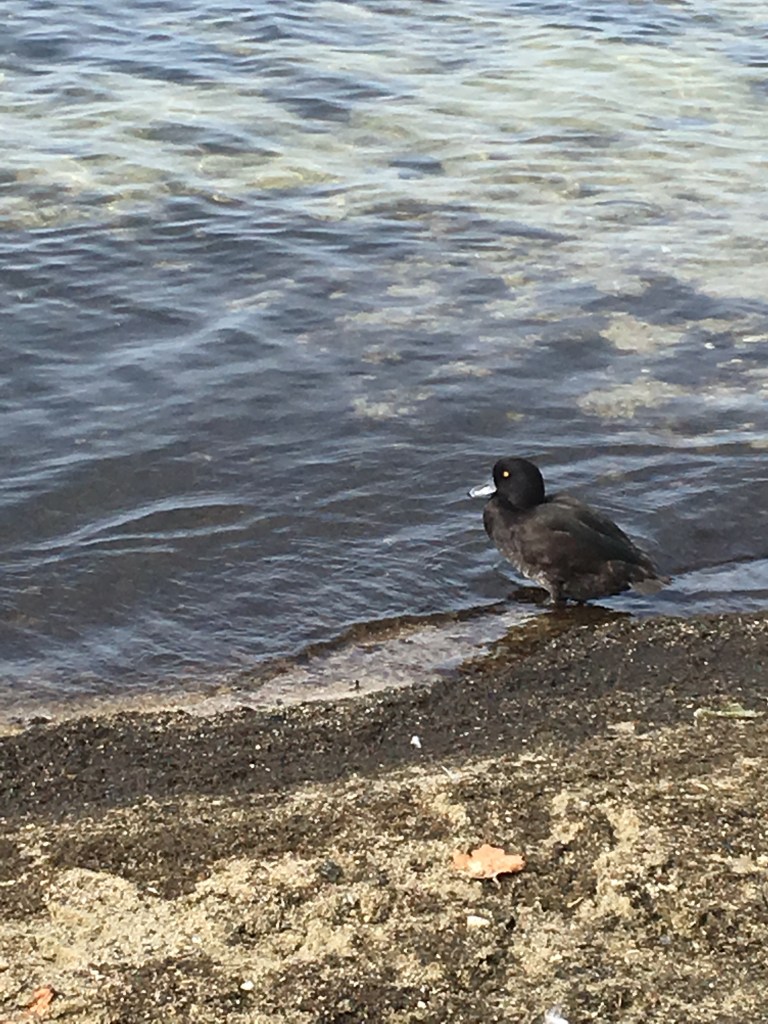

I needed to get back to the motel for my shuttle to the Mitai Maori Village performance and dinner (hangi). One of the local tribes, the Mitai family, has been at this place for hundreds of years, based mostly on the natural spring, the sacred Fairy Spring, that emerges from the ground. There are hundreds of natural springs in this area fed by the rain and aquifers. This cultural event is about 3 hours long with a tour, the arrival of warriors in a boat, the performance of the haka (war dance) and other songs and dances, then a traditionally cooked. For a few of us, I also went on a guided night tour to the Rainbow Springs Nature Park to see kiwi birds at their kiwi rehabilitation site (no pictures allowed). 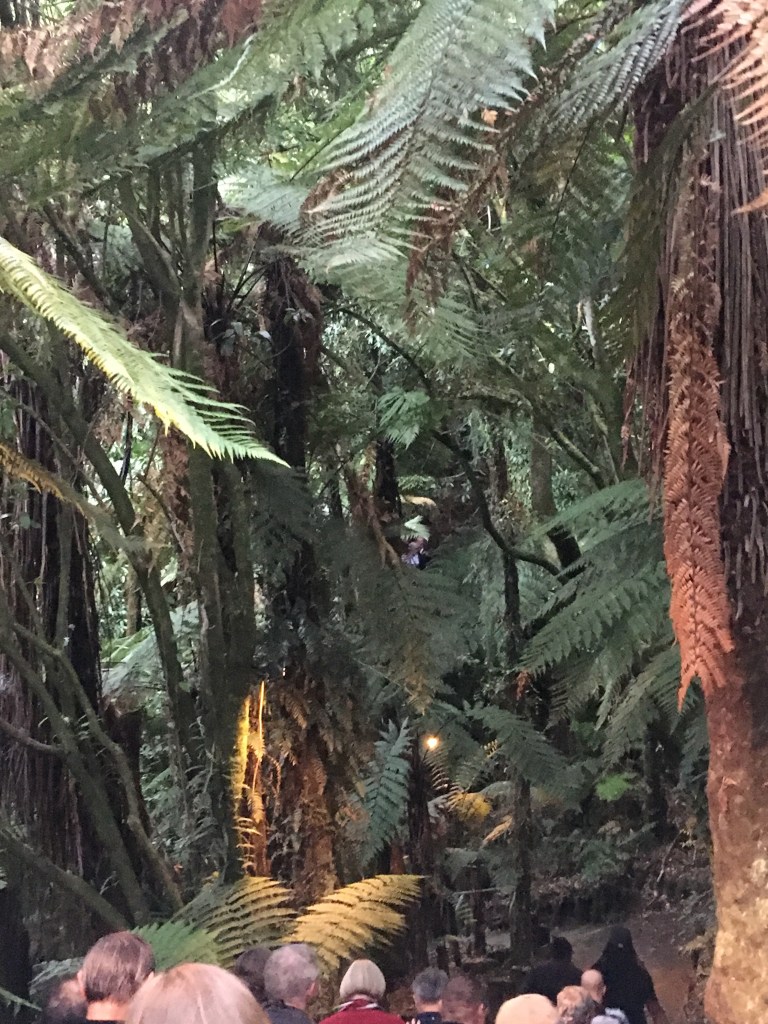


This is the Fairy Spring, above. I know it’s very difficult to tell because the water is so clear but the water level is at the ferns and is about 6 feet deep. The bluish color is naturally occurring and the gray sand is churning at the bottom as the water is coming out of the earth and leads down to this stream where the performance begins…

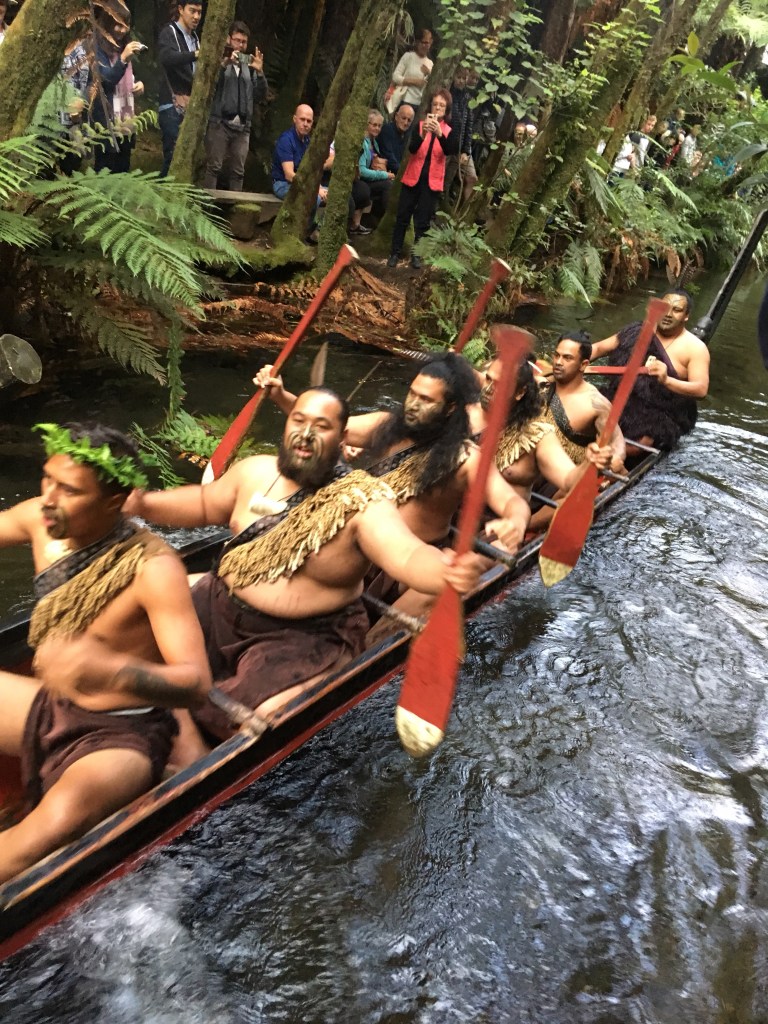
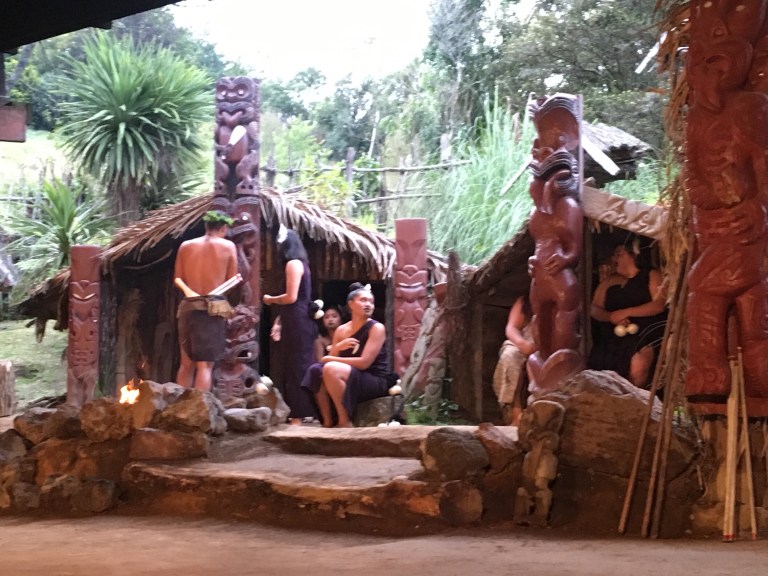

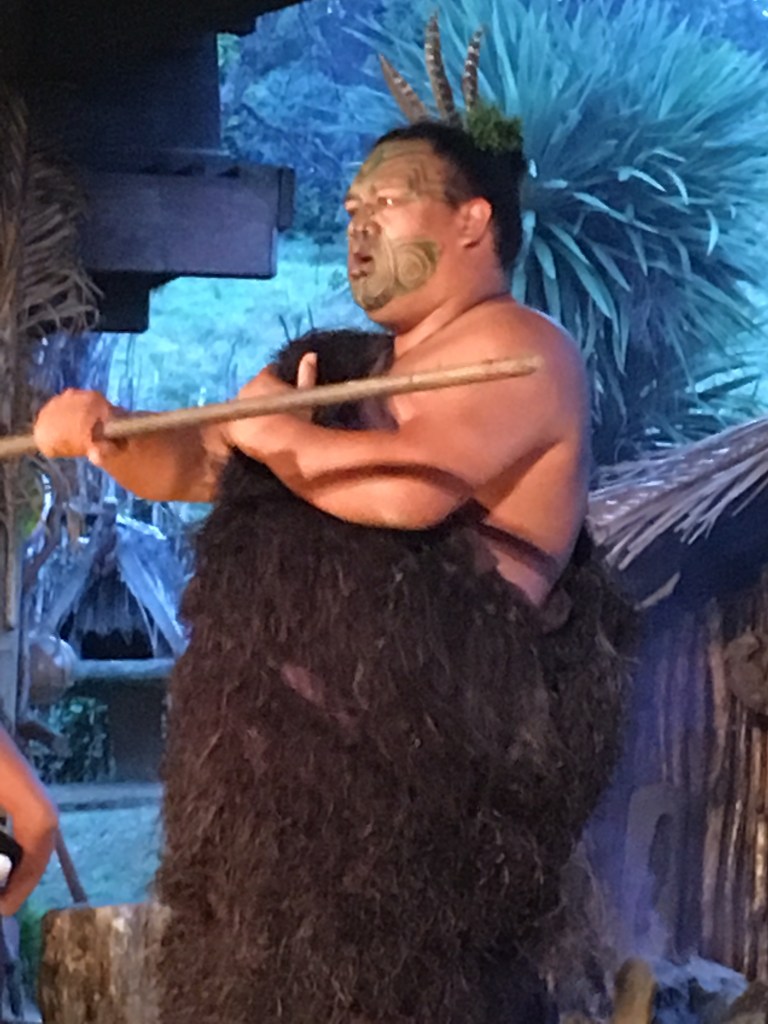
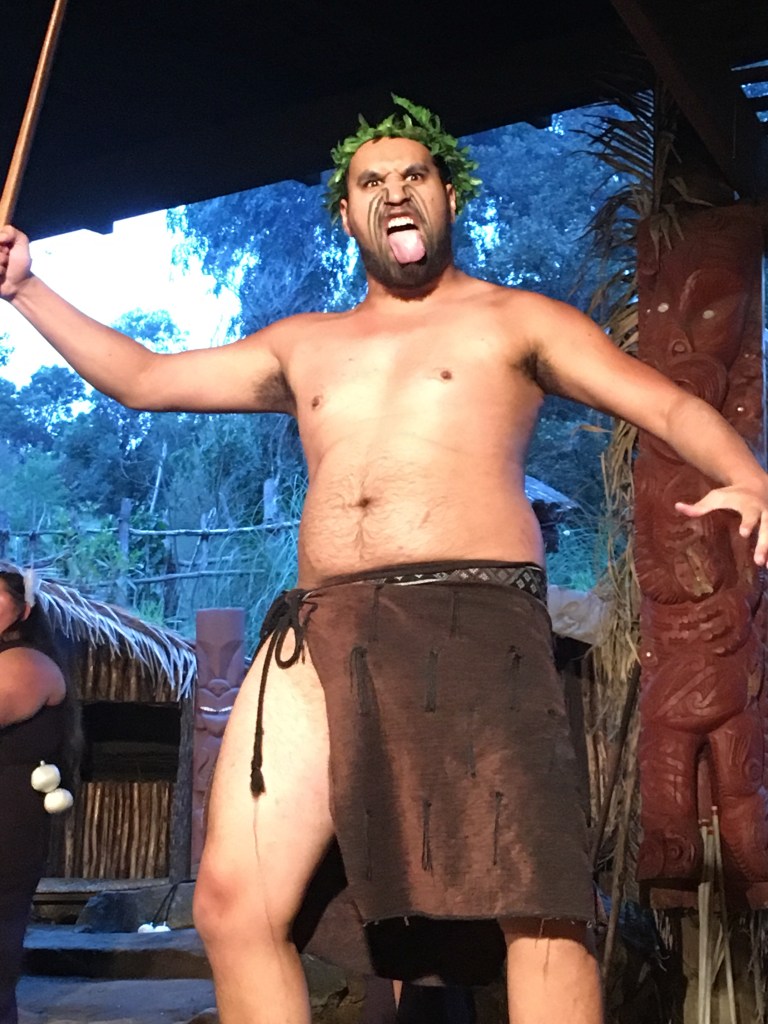


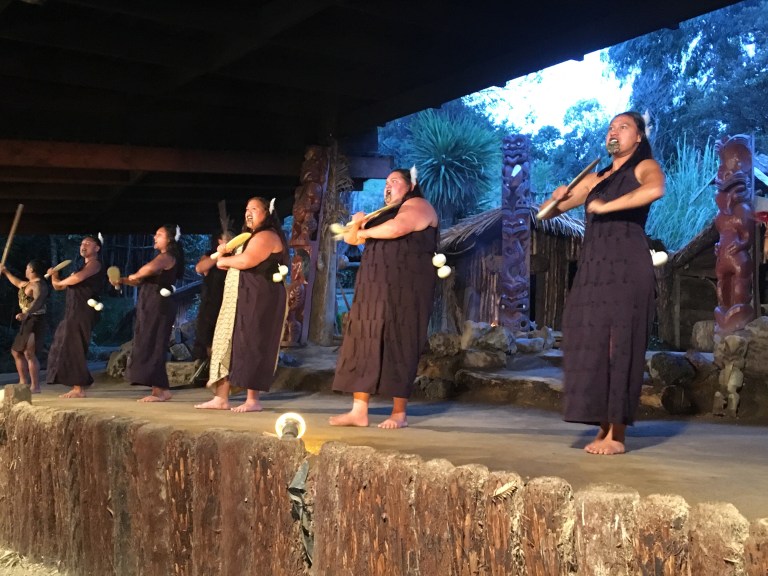
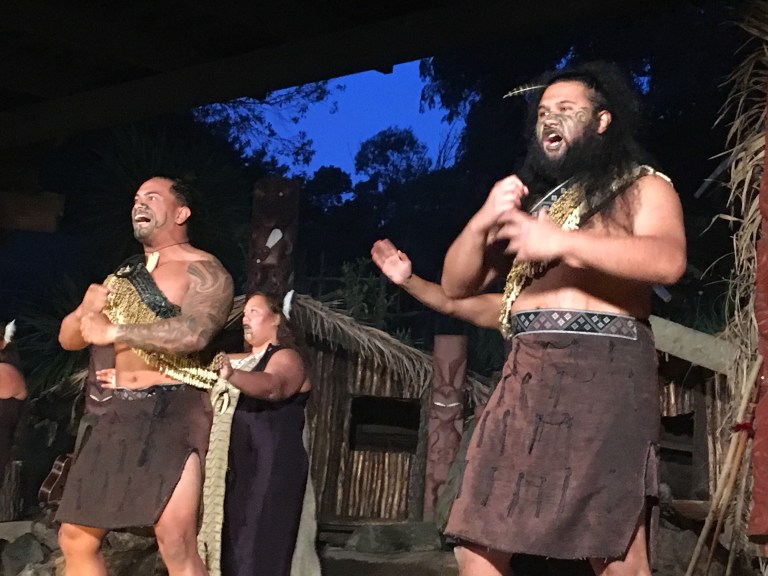
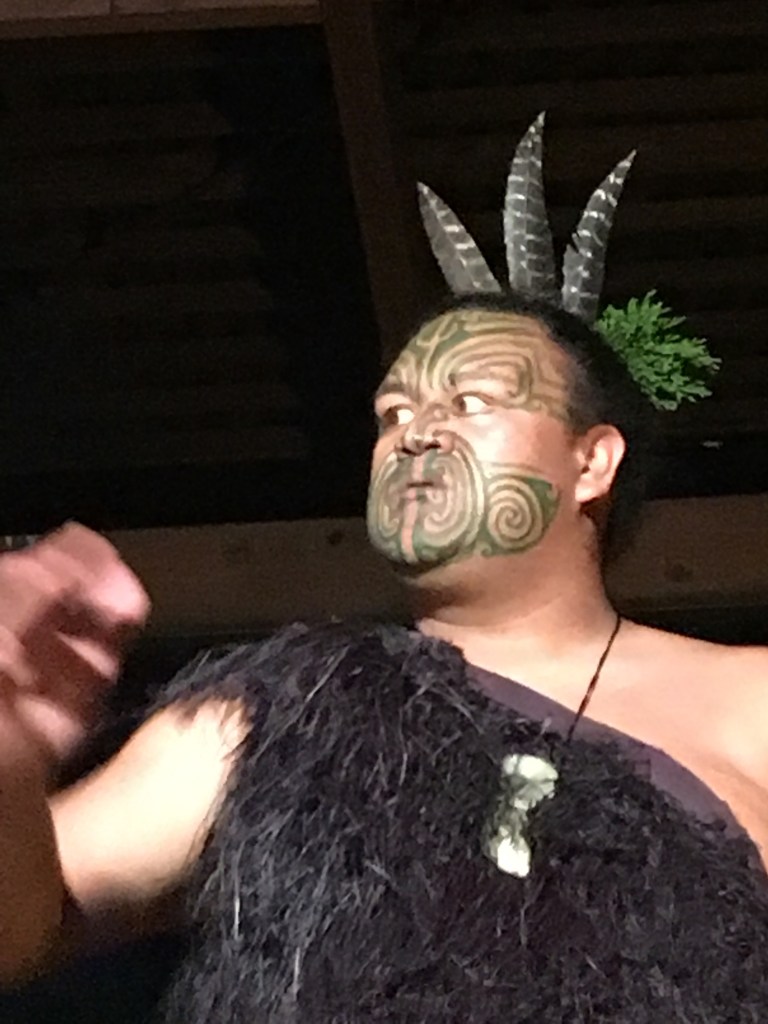
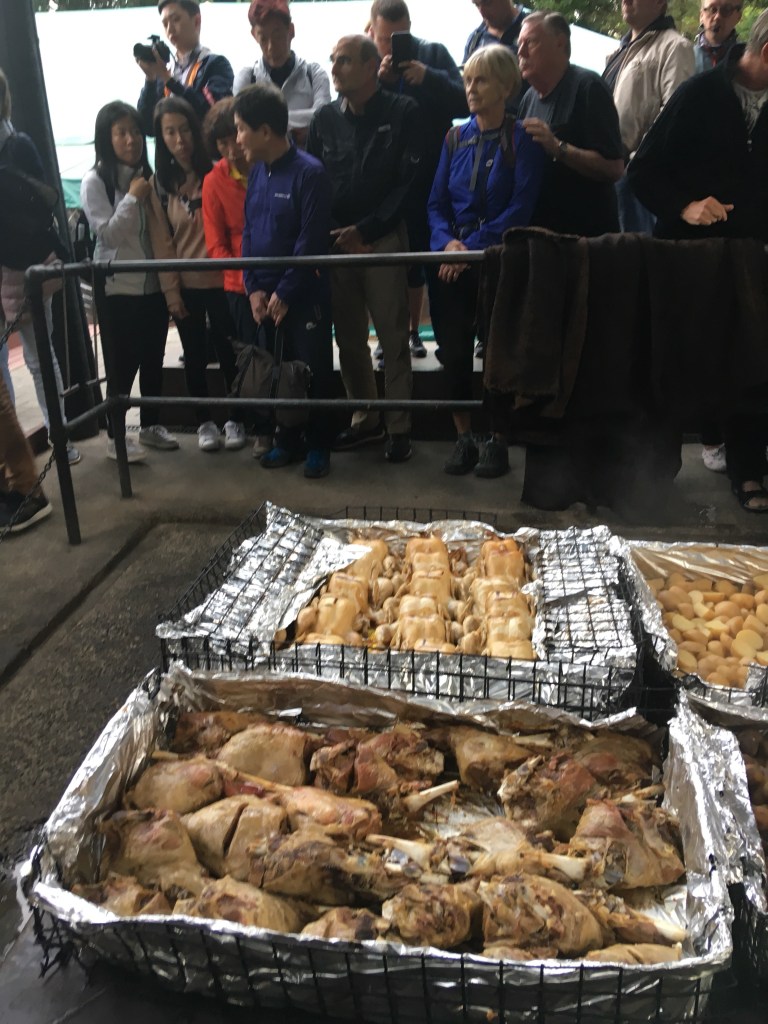
 I had another lovely time with people from various places around the world…Joan and Chris from UK were there, I was table partners with Daniel and Claudia from Berlin (who treated me to a beer) and a lovely couple from France. Oh, and there was a whole troop of Americans on a Roads Scholar tour…fun to talk to them too.
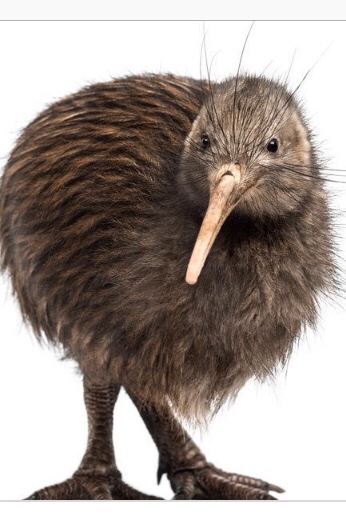
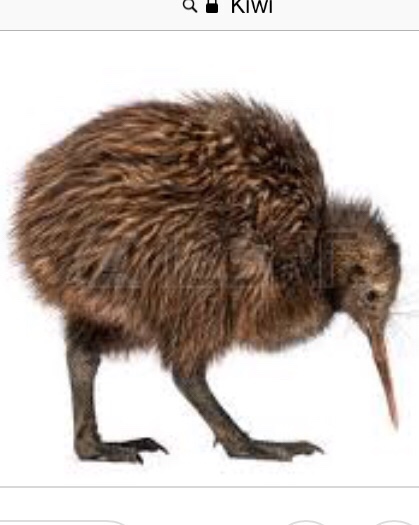
The Rainbow Springs tour was very nice and informative. I did see a kiwi, sort of. Since they’re nocturnal birds their enclosure is set to moonlight. There are three adults in ‘wild’ setting enclosures and observers must be absolutely silent. I did see one of them running around but couldn’t really see features. They’re about the size of a chicken. One of the other kiwis was more active and visible but I didn’t find out about him until it was time to exit. Oh well, I can say now that I ‘saw’ one. Tick that off the New Zealand list! 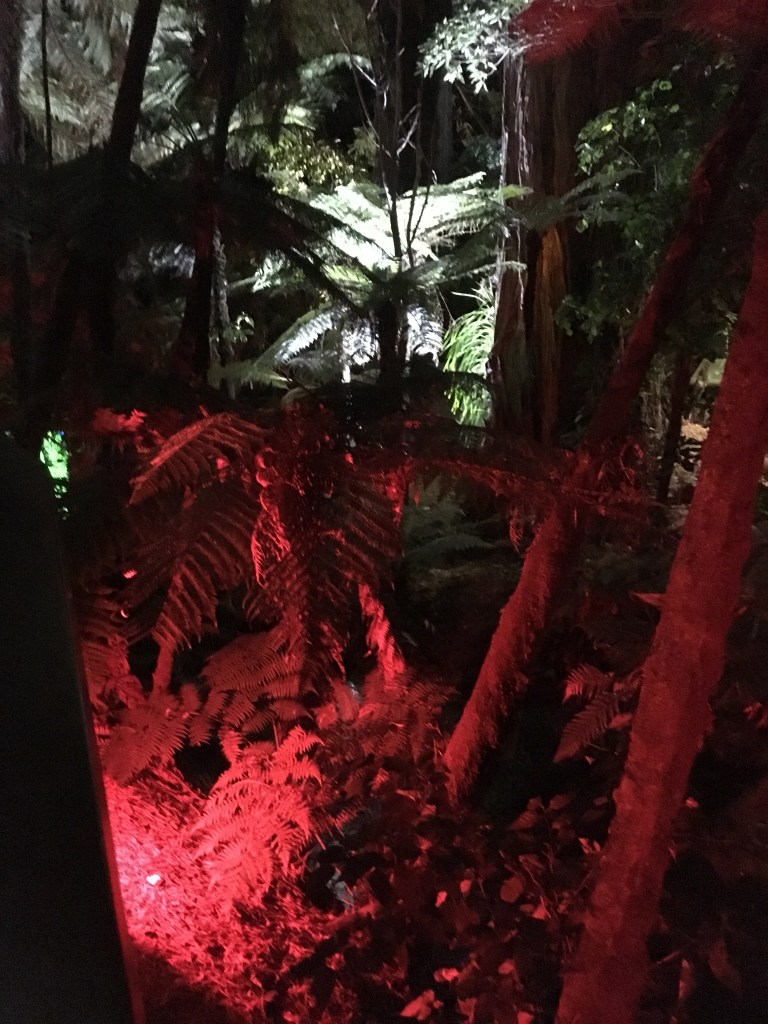

Above is a silver fern, a national icon along with the kiwi bird. (These are stock photos below.) 

 Dawna Bell's Travel Journal
Kiwi,s, Zorbs and warriors – oh my!
LikeLike
Fantastic!!!
LikeLike
Loved that show – and the tattoos
LikeLike